
- Contact Us
- Galleries
- MoreHide
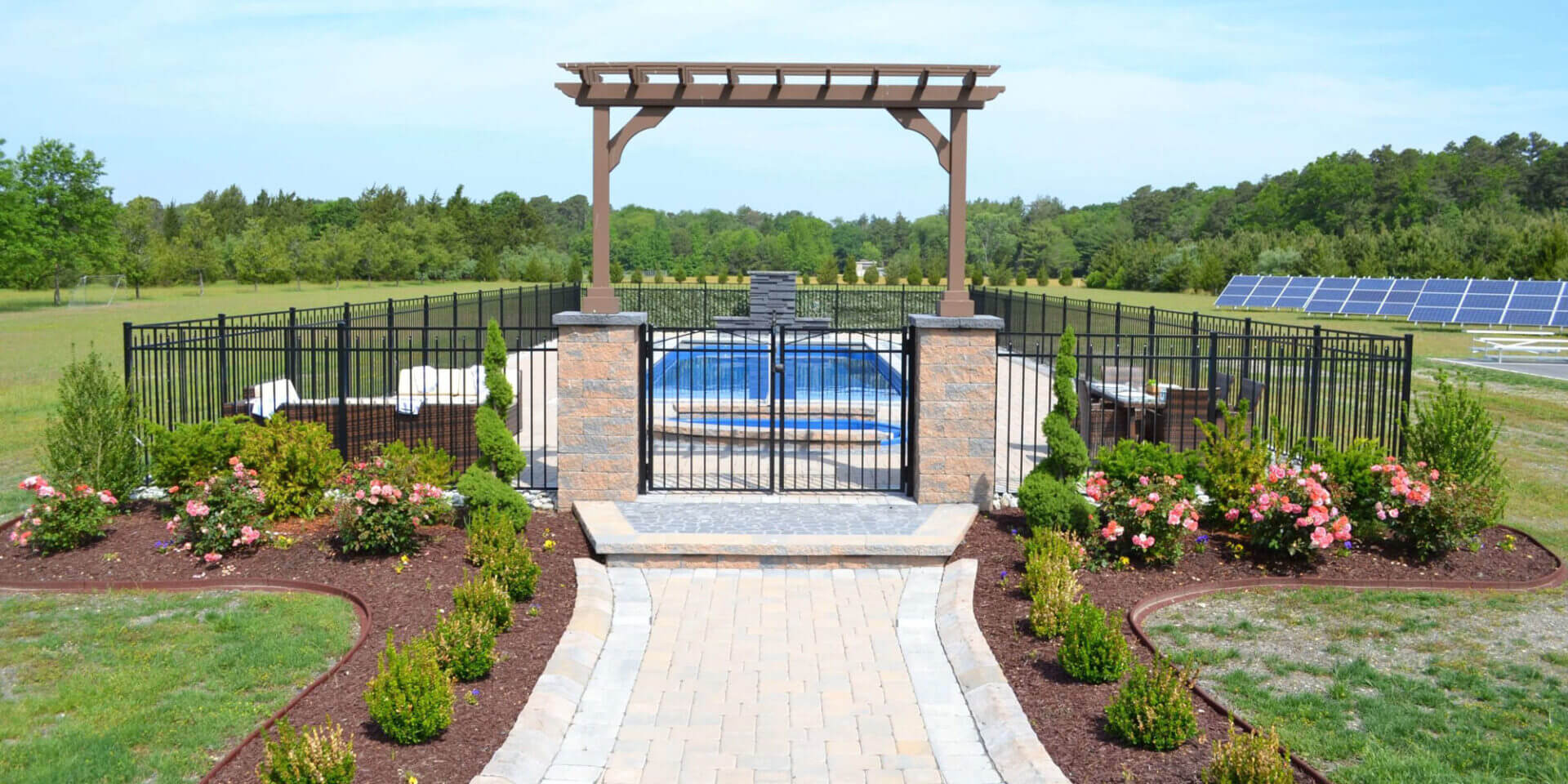
The sound is the point. Most people think they want a water feature because of how it looks, and then they live with one and realize what they actually bought was quiet. A waterfall running twelve feet from a patio does a remarkable job of erasing road noise, neighbors, and the general hum of a dense state.
Water feature installation in New Jersey has some specific constraints that installers in milder climates never think about. Our winters freeze. Our water table varies wildly from the Pine Barrens to the Delaware corridor. Get those two things wrong and you own an expensive problem. Here is how the work actually goes, and what to decide before anyone breaks ground. For the full range, see our water feature services.
There are really three categories, and they differ enormously in maintenance.
Pondless waterfalls are the ones we recommend most often. Water recirculates from a hidden basin under gravel, so there is no standing pool. No algae problem, no liner to clean, no drowning risk with small kids, and they can run through winter without much fuss. If you want the sound and the movement without a second job, this is the answer.
Ponds and water gardens are a genuine ecosystem. Plants, fish, biological filtration, seasonal balance. Beautiful, and considerably more involved. Water garden installation in New Jersey works well, but you should want the hobby, not just the result.
Fountains and spillways are the architectural option. Formal, contained, often built into a wall or as a freestanding basin. Lowest maintenance of the three and the easiest to integrate near a patio or entry.
The mistake we see most is homeowners choosing a pond because the photos looked good, then discovering in August that they signed up for weekly maintenance.
This is where most poor installations reveal themselves.
Water expands when it freezes. If a liner, plumbing line, or pump sits where ice can form against it with nowhere to expand, something cracks. A water feature built for New Jersey needs pipes routed below frost depth or fully drainable, a pump that can be pulled or a system designed to run continuously through winter, and a basin sized so ice formation does not stress the structure.
Running a waterfall all winter is actually the prettiest outcome. Moving water resists freezing, and the ice formations that build along the edges are the best part of the whole feature. It does require a properly sized pump and a plan for what happens during a hard freeze, but it is very achievable here.
Shutting down for winter is fine too. It just has to be designed for it from the start rather than improvised in November.
Where you put it matters more than what it costs.
Site it where you will hear it. Near the patio, near the back door, near wherever you actually sit. A waterfall at the back fence looks nice in photos and does nothing for you at 8pm.
Then check the ground. Parts of South Jersey have a high water table, and excavating a basin into saturated soil is a different job than digging into dry sandy loam. In Burlington and inland Camden counties we hit clay that holds water and complicates drainage. This is why an installer should walk the property before quoting, and why a phone quote for water feature installation in New Jersey is not a real number.
Sun exposure drives algae. Full sun on a pond means more maintenance, always.
The features that read as natural are the ones planned alongside everything else in the yard.
Stone selection should match your hardscaping. A waterfall built from stone that clashes with your paver patio announces itself as an afterthought. Plantings around the basin should tie into the broader landscaping rather than sitting as a ring of unrelated shrubs.
Lighting doubles the value. Submerged and uplit water is dramatic at night and it is the difference between a feature you enjoy for four hours a day and one you enjoy for twelve. Run the outdoor lighting conduit during construction, not after.
If there is a pool in the plan, coordinate them. A spillway or grotto tied into in-ground pools shares plumbing and excavation, and doing both at once costs far less than sequencing them two years apart.
A pondless waterfall typically takes three to five days. Excavation, basin and liner set, plumbing, pump, stone stacking, then backfill and planting. The stone stacking is the slow part and it is the part that separates good work from bad. Rocks placed to look placed always look placed.
Ponds run a week or more depending on size and filtration. Formal fountains vary widely based on how much masonry is involved. Most water feature installation in New Jersey lands somewhere in that three day to two week band.
Across South Jersey water feature installation and up through the Philadelphia suburbs, spring and fall are the easiest seasons to build. Summer works. Frozen ground does not.
Before you commit to a design, look at our completed water features and see whether the stonework reads as natural to your eye. That is the only test that matters.
Pondless: skim debris, top off water in dry stretches, clean the pump screen a few times a year. Genuinely light.
Pond: weekly during the growing season. Filter cleaning, plant management, water chemistry, fish. It is a hobby.
Fountain: seasonal cleaning and a winter shutdown. Simple.
Anyone who tells you a pond is low maintenance is selling you a pond. Good water feature installation in New Jersey means matching the type to the hours you will actually give it.
The right water feature depends on your grade, your soil, your water table, and where you actually sit in your yard. Those four things are not knowable from a photo.
Schedule a design consultation and we will walk it with you, tell you what your ground will support, and design around what you will actually maintain.
A modest pondless waterfall generally starts in the $6,000 to $10,000 range. Larger custom waterfalls, koi ponds with full filtration, and integrated pool spillways run considerably higher depending on stone volume, excavation, and plumbing complexity. Site conditions like a high water table or difficult access affect the number significantly.
Yes, and moving water often handles cold better than still water. Continuous operation requires a correctly sized pump and plumbing routed to avoid freeze damage. Alternatively, the system can be designed for a clean seasonal shutdown. Either approach works, but it has to be decided during design rather than after.
A pondless waterfall recirculates water from a concealed underground basin filled with gravel, so there is no open pool of standing water. It delivers the sound and movement of a waterfall with far less maintenance, no algae management, and no open water safety concern.
A planted pond with fish needs regular attention through the growing season, including filter cleaning, plant thinning, and water quality monitoring. A pondless waterfall or fountain needs only occasional debris removal and a seasonal cleaning. Choose based on how much time you actually want to spend.
Small decorative features usually do not require a permit, but requirements vary by township and depth can matter. Some municipalities regulate water bodies past a certain depth, and electrical work for pumps and lighting generally requires an electrical permit. Your installer should confirm local rules before excavation.