
- Contact Us
- Galleries
- MoreHide
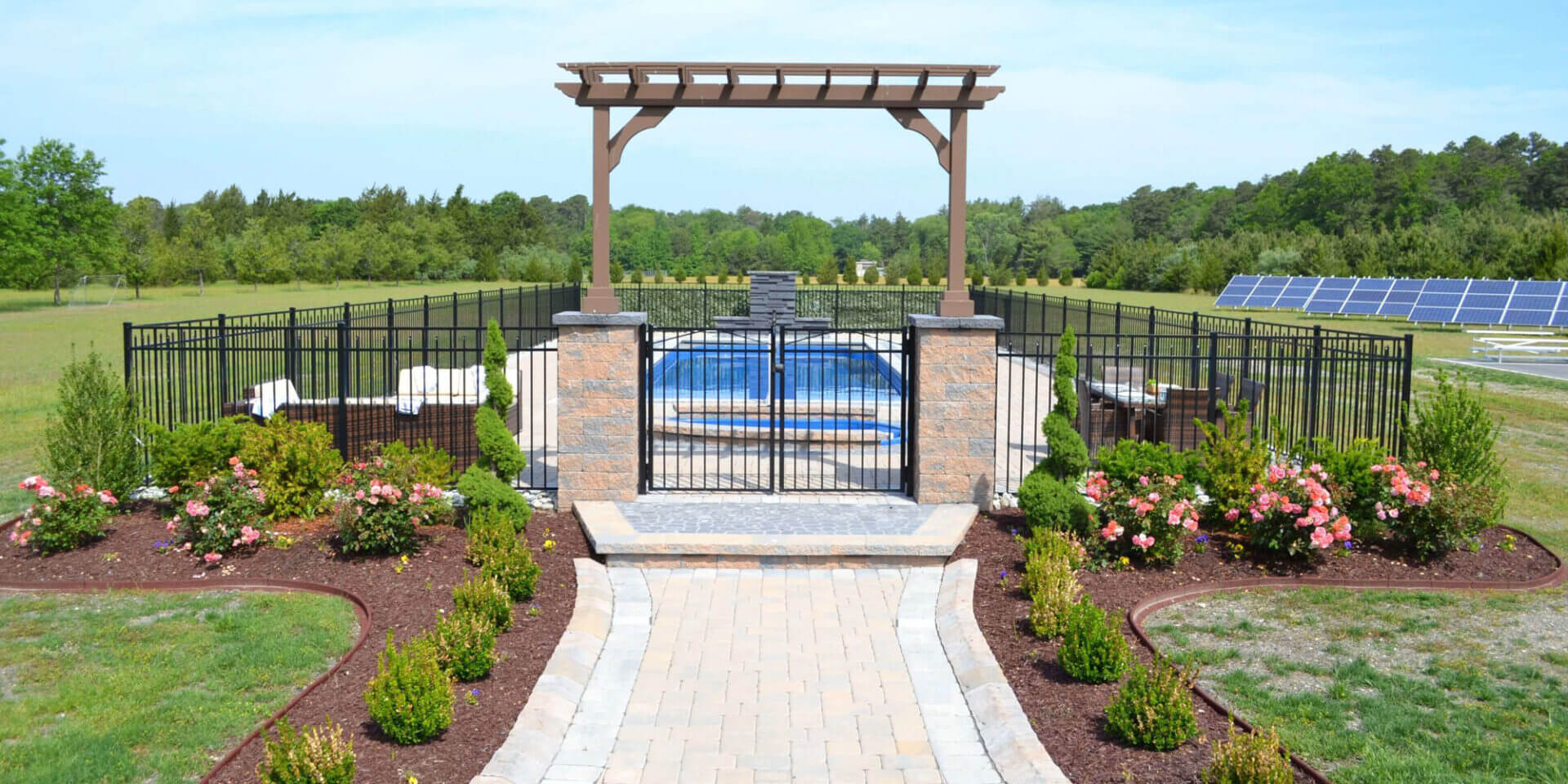
A new pool looks finished on install day and unfinished about a week later. The water is beautiful. Everything around it is bare dirt, a construction path and a fence line. That gap is the part of pool landscaping South Jersey homeowners underestimate most, and it is usually the difference between a pool you use and a pool you look at.
The good news is that the coastal plain we build on gives us real advantages. Sandy soil drains fast. The growing season is long. Most of Burlington, Camden, Gloucester and Atlantic counties sit in a zone that supports a wide plant palette. The trick is choosing material that behaves well next to water, chlorine and bare feet.
Good pool landscaping South Jersey design begins with one decision, and it is not what to plant. It is where the hard surface stops.
Every pool has a transition zone, the band between the coping and whatever comes next. That band can be patio, planting bed, lawn or a mix. Getting the width right is what makes a yard feel generous instead of cramped.
A useful rule is to give the main lounging side at least ten to twelve feet of hard surface, and let the other three sides run narrower. A four foot walk-around on the far side is plenty. That frees up square footage for planting instead of spending the whole budget on pavers.
Grade matters here too. The surface around a pool should shed water away from the coping, and any planting bed downhill of the deck needs somewhere for that water to go. In Gloucester County neighborhoods with clay pockets under the sand, we often build a shallow dry creek or a French drain into the low side so beds do not stay soggy.
Our paver patio work and broader hardscaping pages cover the surface side of that decision in more detail.
The fastest way to hate your pool is to spend every morning skimming leaves.
The best pool landscaping South Jersey yards have in common is low-litter planting. That means avoiding anything that drops small leaves, seeds, berries or needles continuously. Birch, willow, mulberry, sweetgum and most flowering fruit trees are poor neighbors to a pool. So are dense flowering shrubs that shed petals by the thousand.
Better choices for the immediate pool area include ornamental grasses, which move nicely and drop very little. Evergreen shrubs with larger leaves are easy to clean up after. Compact hollies, inkberry, boxwood and dwarf conifers hold shape without constant pruning. Liriope, daylilies and coneflower give color without a mess.
Avoid anything with thorns or sharp edges near bare feet. Yucca looks tropical and hurts.
Root behavior is the other consideration. Keep aggressive rooters well back from the shell and from any plumbing runs. In Camden County yards where the pool sits close to a property line, we plan the screen planting with mature root spread in mind rather than install size.
Broader plant selection and bed design fall under our landscaping service.
Most South Jersey backyards are closer to the neighbors than the homeowner would like. Privacy is usually the top request once the pool is in.
Layered planting beats a single hedge row, and it is the part of pool landscaping South Jersey yards benefit from most. A back layer of upright evergreens sets the screen. A middle layer of medium shrubs softens the base. A front layer of perennials and grasses ties it to the patio. The result reads as a garden instead of a fence, and it fills in without looking like a green wall on day one.
Where space is tight, structure does the work faster than plants. A pavilion or pergola on the neighbor-facing side blocks sightlines from a second-story window in a way no shrub can. Our pavilions and pergolas page shows how those get placed.
In Atlantic County, especially closer to the shore, salt and wind narrow the plant list. Bayberry, juniper, Russian sage, switchgrass and rugosa rose hold up where softer material burns. Wind screening often matters more than visual screening on those lots.
A pool gets used at night more than people expect, and lighting is what makes that possible.
Path lighting along the walk-around, low wash lights into the planting beds and downlights from a pergola beam do more for atmosphere than anything else in the budget. Uplighting a specimen tree at the back of the yard gives the eye somewhere to land after dark, which makes a small yard feel deeper. Our outdoor lighting service handles the layout and the transformer sizing.
Sound is the other half. A spillway, a basin or a small stream feature masks neighborhood noise and gives the space something to do when nobody is swimming. We cover options on the water features page.
The single biggest cost saver is sequencing. Excavation equipment needs an access lane, and whatever is in that lane gets destroyed. Planting a screen before the pool goes in means paying for it twice.
Design the whole yard up front, then phase the install. Pool and patio first, irrigation and beds second, lighting and finish planting third. That order protects the work and spreads the spend.
If you are still in the planning stage, our inground pools page and our fiberglass pool options for South Jersey walk through shell selection, which affects the surrounding grade more than most people realize. Finished projects across Burlington, Camden, Gloucester and Atlantic counties are in our project galleries.
Low-litter plants that tolerate sun and reflected heat work best. Ornamental grasses, compact hollies, inkberry, dwarf conifers, daylilies and coneflower are reliable choices across Burlington, Camden and Gloucester counties. Closer to the shore in Atlantic County, add bayberry, juniper and switchgrass for salt and wind tolerance.
Keep planting beds at least three to four feet back from the coping so foot traffic, cleaning and cover operation stay easy. Larger shrubs and any tree should sit well beyond that, with mature root spread rather than nursery size driving the placement.
Occasional splash from a properly balanced pool rarely harms established plants, especially in the fast-draining sandy soil common across South Jersey. Salt water systems are harsher, so plants in the immediate splash zone should be chosen for salt tolerance.
Yes, and it is very common. The main limitation is access, since equipment needs a path into the yard. Existing fence sections or beds sometimes have to come out temporarily, which is worth confirming before work starts.
Often it does. Beds that sit below the pool deck collect runoff, and even sandy soil can stay wet where a clay layer sits underneath. A shallow drain line or a dry creek on the low side usually solves it during install for far less than a retrofit costs.
Whether the pool went in last summer or has not been dug yet, the landscape plan is what makes it feel complete. Call Evergreen Pros at 609-214-8552 or request a design consultation and we will walk your property in Burlington, Camden, Gloucester or Atlantic County and put a plan together.